Choosing a Cloud Platform as a Data Engineer, What Actually Matters
A practical way to think through which cloud platform to focus on, based on things that actually affect your learning and job prospects rather than which one sounds most impressive.
Why this decision causes so much unnecessary stress
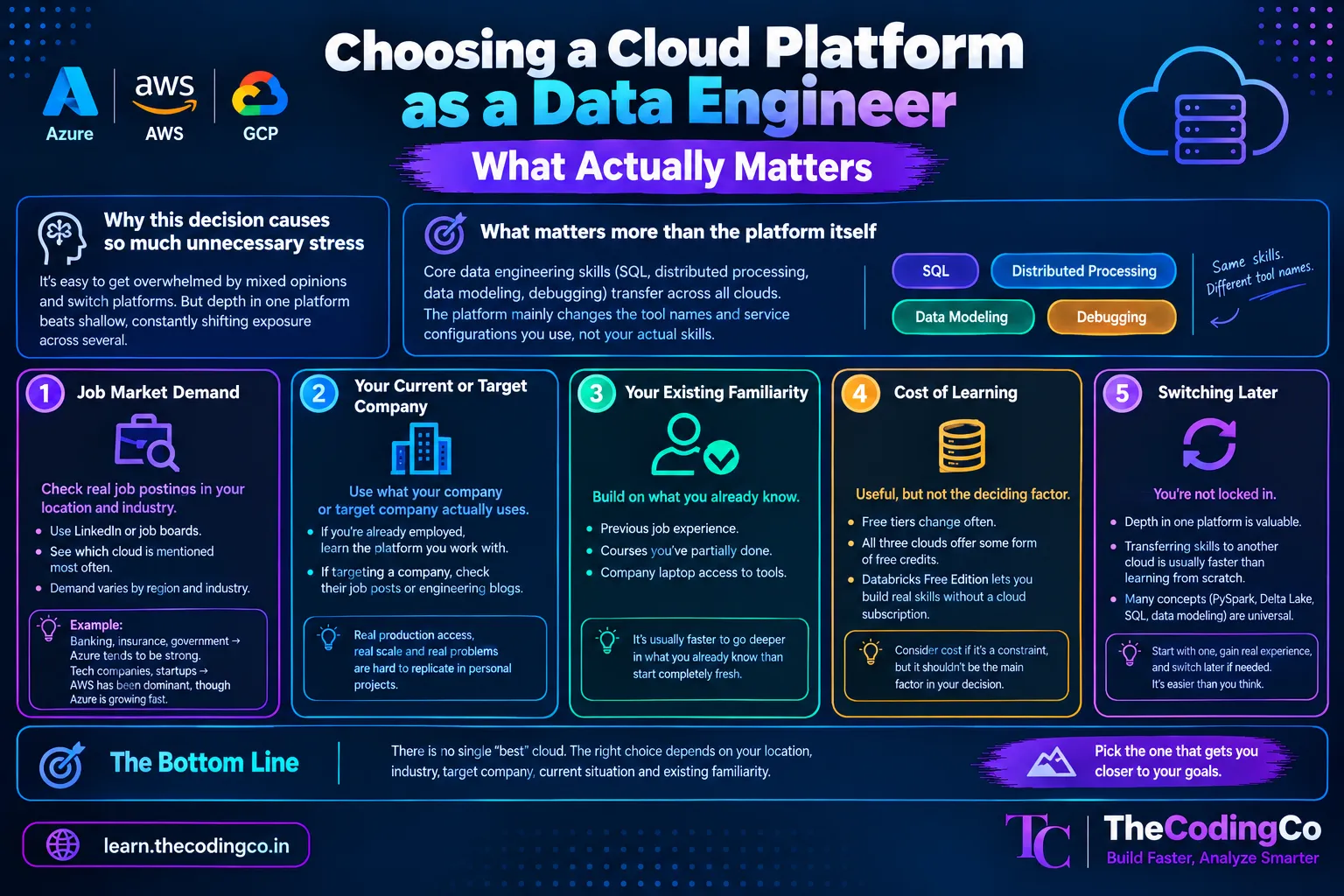
A lot of people early in data engineering spend a surprising amount of time worrying about whether they picked the right cloud to learn, sometimes even switching focus midway through learning one platform because they saw a post online claiming another one is better or more in demand. This back and forth usually does more harm than the actual choice of platform ever would, since depth in any one platform beats shallow, constantly shifting exposure across several.
So rather than trying to declare one platform objectively best, which genuinely depends on circumstances that vary a lot, here is a more useful way to actually think through the decision for your specific situation.
What matters more than the platform itself
Before getting into platform specific factors, it is worth being honest about something. The core skills that make someone a strong data engineer, solid SQL, understanding how distributed processing works, being able to design clean data models, and debugging effectively, transfer almost entirely between clouds. The platform choice mainly affects which specific tool names and service configurations you become fluent in, not whether you understand data engineering as a discipline.
This matters because it means the decision is lower stakes than it often feels. Picking Azure over AWS, or the reverse, is not going to make or break your ability to become a good data engineer. It mainly affects how quickly you can get productive at a specific company using that specific platform.
Factor one, what is actually in demand where you are looking for work
This is usually the single most practical factor, and it is worth actually checking rather than guessing. Job market demand for each cloud platform varies meaningfully by region and by industry, and what is dominant in one city or country can look quite different in another.
A practical way to check this is searching current data engineer job postings on a platform like LinkedIn or a regional job board, filtered to your target location, and simply counting how often each cloud platform is mentioned as a requirement. This tells you far more about what to focus on than general online opinions about which cloud is best overall, since those opinions often reflect the author's specific market, which might not match yours at all.
If you are targeting roles at companies in industries like banking, insurance, or government, particularly in regions where Microsoft has a strong enterprise presence, Azure demand tends to be notably strong. If you are targeting tech companies or startups, AWS demand has historically been strong given how long AWS has been the dominant cloud provider in that space, though Azure has been closing that gap steadily.
Factor two, what your current company or a target company actually uses
If you are already employed and your company uses a specific cloud platform, there is a strong practical argument for going deep on that platform first, simply because you have direct access to real production systems, real scale, and real problems to learn from, which is genuinely hard to replicate through personal projects alone.
Similarly, if you have a specific target company or industry in mind, checking what cloud platform they actually use, sometimes visible through their own job postings or engineering blog posts, gives you a much more targeted signal than a generic comparison.
Factor three, what tools you already have some familiarity with
If you already have some exposure to a particular platform, whether through a previous job, a course you have already partially completed, or a company laptop that happens to have access to certain tools, building on that existing familiarity is usually faster than starting completely fresh somewhere else, even if the other platform might theoretically be a marginally better fit for your target job market.
A factor that matters less than people think, cost of learning
A common concern is that learning one cloud platform costs money through cloud credits or subscription costs, and this sometimes pushes people toward whichever platform currently offers the most generous free tier. This is a reasonable practical consideration if cost is genuinely a constraint, but it should not be the deciding factor on its own, since the free tier landscape changes fairly often across all three major clouds, and the actual demand and fit for your career matters far more in the long run than which platform happened to offer the best free trial the month you started learning.
It is also worth remembering that tools like Databricks Community Edition, now called Databricks Free Edition, let you build real, meaningful skills in PySpark and Delta Lake without needing any cloud subscription at all, which somewhat reduces how much this factor should weigh in the decision anyway.
What switching platforms later actually looks like
A common worry is that committing to one platform now somehow locks you out of others permanently. In practice, this is not really true. Someone with genuine depth in Azure, having actually built and debugged real pipelines using Azure Data Factory, Databricks, and Synapse, can pick up AWS or GCP meaningfully faster than someone starting from zero, precisely because the underlying concepts transfer, even though the specific tool names and configuration details need to be relearned.
This is one of the stronger arguments for picking one platform and genuinely committing to it, rather than trying to spread learning time evenly across all three from the start. Depth in one platform is what actually builds transferable understanding, not shallow simultaneous exposure to several.
A simple way to actually decide
If none of the factors above point clearly in one direction, a reasonable default is picking whichever platform is most commonly required in job postings for your specific target location and industry, since that is the most directly actionable signal available. If you already have access to a specific platform through a current job or company laptop, even without full permissions to run things, that existing exposure is usually worth leaning into rather than starting fresh somewhere else purely based on general reputation.
Interview angle
If asked why you chose to focus on a specific cloud platform, an answer grounded in something concrete, like the job market in your target location, or direct exposure through your current company, tends to sound more genuine and thought through than a vague answer about it simply being a major or well known provider. It also signals that you made a deliberate, informed choice rather than following a trend.
Quick recap
Choosing a cloud platform to focus on matters less than people often assume, since the core skills of data engineering transfer well between clouds regardless of which one you start with. The most practical factors to actually weigh are job market demand in your specific target location and industry, what platform your current or target company actually uses, and any existing familiarity you already have. Cost of learning matters less than it seems, especially with tools like Databricks Free Edition available without any cloud subscription. Genuine depth in one platform tends to make learning a second one significantly faster later, which is a stronger argument for committing to one choice than trying to learn all three at once.