Skills You Actually Need to Become a Data Engineer in 2026

A realistic breakdown of what skills actually matter for a data engineering role right now, separated from the long lists of tools that sound impressive but are not where beginners should start.
The problem with most skill lists
Search for data engineer skills and you will find lists with thirty tools on them, everything from Kafka to Airflow to Kubernetes to five different cloud platforms at once. That kind of list is technically accurate in the sense that all of these tools exist and get used somewhere, but it is genuinely unhelpful if you are trying to figure out where to actually spend your time.
A more useful way to think about this is separating skills into what you need to be functional, what makes you genuinely good, and what is nice to have but not urgent. Here is that breakdown, focused specifically on where things stand for Azure based data engineering roles right now.
SQL, and actually being good at it
This is not optional, and it is not something you learn once and move past. SQL is the language you will use constantly, whether you are querying a Delta table, writing transformation logic, or debugging why a report shows the wrong number.
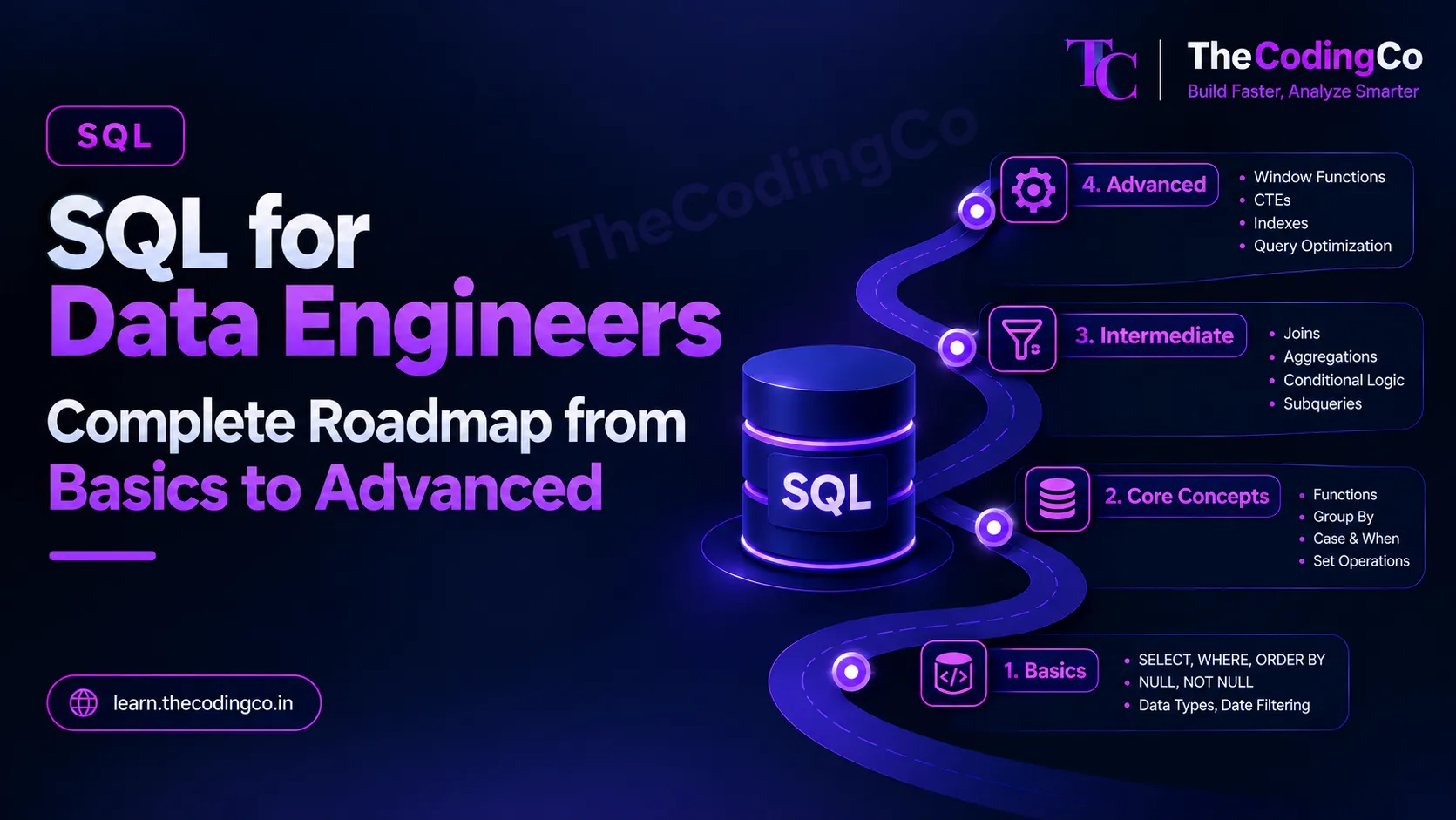
Being good at SQL means more than knowing SELECT and JOIN. It means being comfortable with window functions, common table expressions, and understanding how to write queries that perform well on large datasets, not just queries that technically return the correct answer.
-- being comfortable with something like this, not just basic selects
SELECT
    customer_id,
    order_date,
    order_amount,
    SUM(order_amount) OVER (
        PARTITION BY customer_id
        ORDER BY order_date
    ) AS running_total
FROM Silver.Orders;
If you can only write straightforward queries and get stuck the moment a window function or a recursive CTE shows up, that is the first gap worth closing before anything else on this list.
Python, specifically for data work
Python matters here mainly through PySpark, which is how most transformation logic gets written in Azure Databricks. You do not need to be a software engineer level Python developer, but you do need to be comfortable enough to write and debug data transformation code without struggling with basic syntax.
from pyspark.sql import functions as F

df_result = (df.filter(F.col("order_amount") > 0)
               .groupBy("customer_id")
               .agg(F.sum("order_amount").alias("total_spent")))
The practical skill here is being able to translate a business requirement, like "calculate total spending per customer excluding cancelled orders," into working PySpark code without needing to look up basic syntax every few lines.
Understanding how Spark actually works
- This one gets skipped a lot by beginners who learn PySpark syntax without understanding what is happening underneath it, and it becomes obvious the moment an interview question goes even slightly beneath the surface.
- This means having a real grasp of concepts like lazy evaluation, why a transformation like a filter or a select does not actually run until an action like count or write is called, and understanding the difference between narrow and wide transformations, since wide transformations like a groupBy involve shuffling data across the cluster and tend to be where performance problems show up.
- Without this understanding, you can write PySpark code that works on a small sample dataset in a notebook, but falls apart or runs painfully slow the moment it hits real production data volume.
Delta Lake fundamentals
Since most modern Azure data platforms are built around Databricks and Delta Lake, understanding what Delta Lake actually adds on top of plain file storage is close to mandatory now, not optional. This means understanding ACID transactions, how the MERGE command works for implementing things like slowly changing dimensions, and how time travel and versioning work.
delta_table.alias("target").merge(
    new_data.alias("source"),
    "target.customer_id = source.customer_id"
).whenMatchedUpdateAll() \
 .whenNotMatchedInsertAll() \
 .execute()
A lot of real world data engineering work on Azure comes down to writing and debugging logic like this, so treating Delta Lake as a core skill rather than an advanced extra is the more accurate way to think about it.
At least one cloud platform, in real depth
This does not mean knowing Azure, AWS, and GCP equally. It means genuinely knowing one platform well, understanding not just the tool names but how they actually fit together. For Azure specifically, this means being comfortable with Azure Data Factory for orchestration and ingestion, Azure Data Lake Storage Gen2 for storage, Azure Databricks for processing, and enough of Azure Synapse Analytics to understand where it fits for reporting workloads.
Knowing a little about three different cloud platforms tends to be far less valuable in an interview than genuinely knowing how one platform's tools work together end to end.
Basic data modeling
Understanding concepts like fact and dimension tables, star schema versus snowflake schema, and how to design a table structure that is actually easy to query and report on, matters more than people expect early on. A data engineer who can move data around but designs poorly structured tables ends up creating problems for every analyst and report built on top of that data later.
Debugging and reading error messages properly
This is not a tool or a language, but it might be the single most practical skill on this entire list. A huge portion of real data engineering work is not writing new code, it is figuring out why something that used to work suddenly does not. Being able to actually read a Spark stack trace, understand what an error is telling you instead of just googling the exact error message and hoping for a quick fix, and knowing how to isolate where in a pipeline something is going wrong, saves an enormous amount of time compared to guessing.
What matters less than people think, at least early on
Things like Kafka, Kubernetes, and infrastructure as code tools like Terraform do show up in more advanced data engineering roles, particularly at larger companies with dedicated platform teams. But for someone building toward their first data engineering role, spending significant time on these before having solid SQL, PySpark, and Delta Lake fundamentals tends to be time poorly spent. These are worth learning eventually, but they are not where the foundation should be built.
A realistic order to actually learn these in
Start with SQL, and genuinely get comfortable with window functions and CTEs before moving on. Then move into Python and PySpark, focusing specifically on data manipulation rather than general programming. Alongside that, spend real time understanding how Spark works underneath the syntax, not just memorizing commands. Once that foundation feels solid, go deep on Delta Lake specifically, since this is where a lot of real world Azure data engineering work actually happens. Pick Azure as your cloud platform and go deep rather than wide. And throughout all of this, practice reading and actually understanding error messages instead of just copying fixes from search results.
Interview angle
If asked what skills matter most for this role, naming SQL, PySpark, and Delta Lake specifically, and explaining why each one matters rather than just listing tool names, tends to land far better than reciting a long list of technologies. It also helps to be honest about what you know deeply versus what you have only touched briefly, since interviewers can usually tell the difference within a few follow up questions anyway.
Quick recap
The core skills that actually matter for a data engineering role right now are strong SQL, Python specifically for data manipulation through PySpark, a real understanding of how Spark works underneath the syntax, solid Delta Lake fundamentals, genuine depth in at least one cloud platform rather than shallow knowledge of several, basic data modeling, and the ability to actually debug problems rather than guess at fixes. Everything else on the longer lists you find online tends to matter more later, once this foundation is solid.